This is software (AWS) generated transcription and it is not perfect.
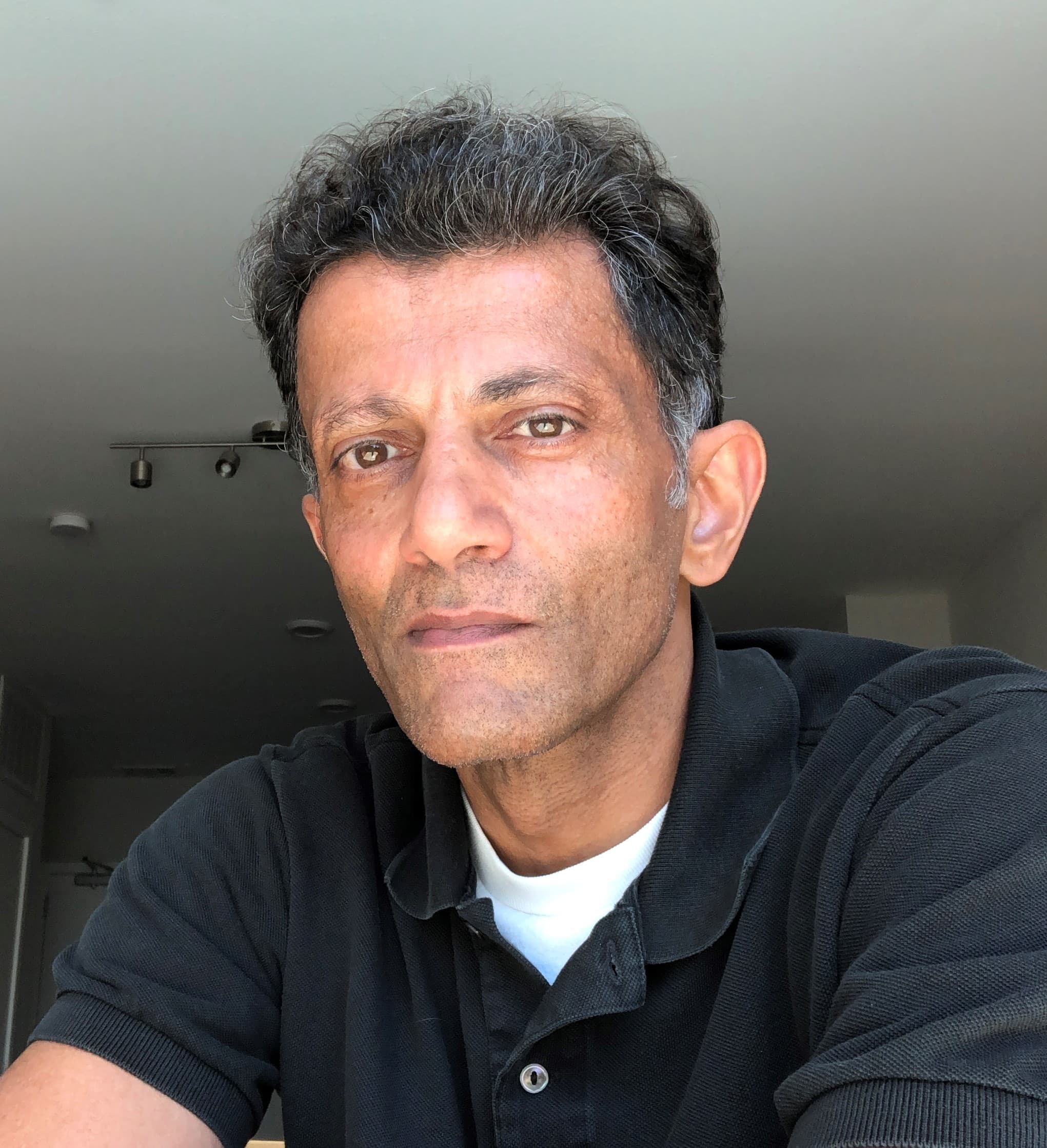
I mean, my story is really a random walk in the sense that, I had not dreamed of being where I am today, even as early as let's say, 2002 or 2003, just when I joined the venture business, I always wanted to do something in engineering and medicine that was a given. I mean, this was probably around the 10th or 12th standard. And so, this was in India of course, way back when, and it so happened that I did mechanical engineering, then I came to the US, I got a chance to do Biomechanics and then something really helped me out, which again, was a trivial thing that we checked, done in India, but turned out to be very, very helpful because I had to learn German in school, so I had German as a foreign language, and I'd applied for a fellowship, while I was finishing my master's here in the US of Michigan Tech, and they offered me a fellowship to go to Germany as long as I would come back and do a Ph.D. One year, all expenses paid, and they would essentially, they would have taken, they would have given the credits for all the coursework or anything I did, any research I did. So I thought it was a great deal and I said, OK, sure and that's how I got from the US into Germany. And, I landed up, landed in a pretty good place in Germany where it was the Technical University, but it had an institute for biomedical engineering and that was actually in the medical school. So, I could do both. I was doing my Ph.D. or taking courses and doing research for my P.H.D., which was in engineering mechanics, and I was taking courses in medicine, mostly in orthopedics, because I wanted to do something in orthopedic biomechanics. And I liked it so much and the university there was kind enough to offer me a research assistantship, and I just ended up staying in Germany, and four years later, I had my Ph.D. And then I was pretty much, I could have had the choice of going back into academics as you've done. I had a couple of opportunities of being an assistant professor in the US, were going to the industry and I chose to go into the industry, and I worked for Bristol Myers & Squibb at that time, and it was really good because lucky for me, the Ph.D. thesis topic and what I was doing at work was almost identical, which rarely happens is because you do research, and then it just catches dust somewhere in a library. But actually, I got to use it. So, that's how I got into the kind of the industry world where the, let's say, and then things progressed. I was curious. I was always wanting to know more about the business side of things, and, six or seven years into first five years at Bristol Myers and then I actually got an opportunity to go to Switzerland to work there for two years, which is really good and then applied to Business School, which, of course, was against what most people most of my friends told me, is that, hey, why, First of all, you did a Ph.D., you wasted so many years, then you do an MBA and you're were almost 31. So why do that? But anyway, I ended up doing that, and it was a really great decision because out of it, I got the chance to explore all sorts of things on. Again, it was one of those counter decisions which I took then against me. I would say everybody in at least 1998 wanted to get in to, I would say venture capital or they wanted to be into, consulting, strategy consulting. Or, of course, investment banking was really, really big and I chose all of, I did not choose any of those and ended up working for hustle Plattner, which was, just SAP essentially, and as a hustle being the founder and CEO of SAP I thought that was probably one of the best places to learn. So and it turned out to really be true. It was an unbelievable opportunity for me to learn and grow and learn from somebody who had, of course, accomplished so much, and so that led to, I mean, it was a great platform, I ended up founding, co-founding together with three of my colleagues at SAP, a company called SAP markets, which was like the e-commerce company. And SAP funded us and there we had an independent board and one of the board members was Vinod Khosla from K P. And so that was kind of my at least introduction to the VC world, I had really not actively looked at any of that. And then 2003, a year after SAP had re-acquired SAP markets, KP essentially, acquired me. And I was, I had, like, whatever 23 or 24 odd interviews with all the different partners. And then I had the choice of essentially joining, getting into the VC world, or staying at SAP. And so that was kind of a big decision. And I didn't take it lightly, ended up going to KP, and was again a fantastic decision because I got to learn from some unbelievable people. So that kind of really brought me into the investing world. And yeah, I mean, that's kind of a long story, but yeah, I just kind of the total random walks. So from mechanical engineering to bio-mechanics to medical devices to, enterprise software, to venture capital right? I mean, yeah.
So, most of the investing I've done has been in the early stage, so mostly in Series A, Series B. So start-up or scale-up, and scale-up is even that is a little too, it's not really growth because most of the Series B investments I made were not really of where companies had serious revenue. I mean, they were still early stage. I definitely like companies which actually are trying to solve a large for market need with, the help of technology and where the barrier is quite high, which means that the technical risk is quite high, I mean so on that, from that perspective, the criteria for investing is really you go for a very, very large market, ideally underserved, where you have a solution which is enabled by, a critical piece of technology and which is hard to replicate. So it's not easy to do. Of course, that's not easy to do in enterprise software sometimes because it's not that it's very hard. I mean, it's not impossible, right? Nothing. And it's not like, let's say, a semiconductor in the hardware ward, things are really, really hard. I mean, you solve technical problems, which other people cannot solve. I mean, if you solve them, then if you solve them you get a huge advantage. In software, it's, the nut to crack is more, how do you come up with the right product-market fit, I think, which is the next question, which then you can sell, and you can scale your sales model in a way that does not consume too much time and too much money. So whoever scales there revenues fast. on enterprise software at least, ends up winning. I mean, it's not so much the technology differentiation as much as, what have you done, which is different or smart to enable your sales model. So that's kind of, at least my investment philosophy. I mean, it's different if you apply to different geographies. If I look at India today, India in 2006-2007 when, we had just started investing. its a very different world, the market opportunities, are still there and growing right? So I mean anyway, I'm just saying, it's kind of a model which applies everywhere, but you also need to look at what are geographically very large markets where there are opportunities and there is not too much competition, because that's also important. You don't wanna be in a hyper-competitive space, and then, you end up losing because you could not raise enough money or didn't have enough differentiation.
So an investor presentation or even a kind of some sort of, let's say written note of what the founder started to who the team is, what the market is, on. And what is it that differentiates them from someone else? It's essentially how a person formulates, the initial message it doesn't have. There's no magic, number of, how many slides it needs to have, or how many pages does it need? I need to see the financials or it's really not that it's really about the articulation of what your company is or what your venture is, and how you want to take it to the next level, that only comes. I mean, it is anyway, it's like, but I mean, the E.g. I would give you is that sometimes, of course, so many storms applied of, god knows Stanford and Harvard and whatnot, right? I mean, everybody has to write their own essays in the application process. And, when you right write your own essay. sometimes, exactly. hey, this is really different, I'm doing something which nobody else can offer that. And that kind of articulation, which is what you're really looking for, is what's your story? Why is it different? Why do you think it's going to succeed? I mean, it's no different than how you write your own, application for a great school and try to make a pitch of why you're the right candidate. So not too different. But that's. It's really, synthesizing it talks well.