This is software (AWS) generated transcription and it is not perfect.
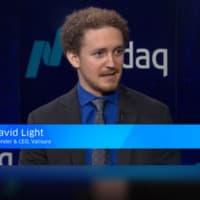
Quite a lot of questions on one with a pretty interesting story behind it I think, where, How did I get to where I am today? I think I was always very interested in sciences, I was a science nerd. Very early on, particularly in chemistry. I always loved fireworks and may have, built-in many factors, some of my own back in the day, And, I was one of the very early, participants of eBay buying and selling all sorts of science type of equipment and things from an early age and I think I just really liked the cross-section of science and business and entrepreneurship, really making an impact with really interesting and cool things. I studied molecular biology at Yale. And a lot of chemistry. I think I was just really just interested in the general impact on humanity from the sciences and I think specifically biotechnology has a very straightforward and interesting angle at that and at health care as a whole, and in terms of the particular startup idea of Valisure where I'm working at and then putting a lot of energy these days, is a good friend of mine from college called me up one day and was telling me, Hey, listen, I'd take this anticonvulsant medication and take it obviously, every month for many years and every once in a while I refilled my meds, and I just feel terrible that month, get all these side effects, relapses sometimes, and he's got great doctors and his doctors tell him, nowadays, especially generics, which are most of the drugs, they're almost all made overseas in India and China, and it's hard to regulate over there sometimes and there's a lot of just cracks in the overall system, and it is what it is. So there's variability of medications, were nothing we can do about it as doctors or pharmacists and he obviously didn't like that answer and called me up from the technology development world, and we started to learn more about this whole issue. First of all, the fact that really the only time that the chemistry of what's inside of medication, the only time that that's checked is by the many factors that then sell it, and then self report this data to the FDA and the FDA. Really, Its job is to go in and look at the paperwork and the register of facilities that are manufacturing these products, not actually check what's inside of them. So the whole concept of Valisure was, Hey, we should check. We should have an independent chemical check of what's in medications before they get dispensed to a patient and also make that very transparent invisible. You know, we're all as consumers used to seeing, nutrition labels on our food or gluten-free, organic. I mean, we worry so much about everything we put in our bodies every day. And yet, all you know about your meds is, it comes in orange bottles and got a number printed on it. So you even have a kind of a certificate of analysis, that is very boiled down and straightforward to understand that comes with that batch that actual batch of medications was our thought to test and to make that transparency and visible measure of quality assurance, all the way down to the patient. And so we developed a variety of technology ourselves some laser-based approaches that allow us to do this kind of analysis faster, easier, cheaper but still very high precision and accuracy. We added industry-standard techniques and platforms and essentially took this laboratory, which is really where our expertise is and first, attached it to a pharmacy. So we launched this validated quality assurance pharmacy with over 2000 drug products towards the end of last year, and I've been having a lot of impact since because turns out when you just do this novel crazy thing of checking, you find a lot of problems that we're, the company behind, having found the whole Zantac and renew Deen issues, which have caused global recalls and even FDA now has agreed with this position of its an unstable drug and taking it entirely off the American Market. This is a drug that used to be the number one drug in the world and has been on the market for almost four decades. Foreman recalls that are happening currently in the middle of 2020, the number one diabetes drug again due to actually in this case, poor manufacturing practices causing carcinogens and the medications. So a lot of importance and showing the importance of this kind of quality assurance. And, our high level thought of doing this before the patient gets it is something that we're looking to scale now, even beyond our own pharmacy. We now have multiple clinics that are using our validated products in their own pharmacies and dispensing it to their patients. And grow it even more from there. So maybe a long-winded answer to your questions, but hopefully gets a lot of background.
Sure, So I think you probably got the really long elevator pitch of, Valisure in the previous question but, the quick elevator on Valisure is that we're chemically analyzing what's in medications before they get dispensed to a patient and making that quality assurance visible all the way to the patient. And we're bringing this to patients directly through farmers. Through an online pharmacy that's structured throughout the United States through wholesale and certification and kind of growing this into the whole healthcare chain. It's a really high level overview of Valisure. And, the interesting question about the first few weeks and how did this change over the next few months, and I would say the next few years. The original concept of Valisure came when the friend of mine Adam called me up and was telling me about his own medications and, you know, in the very beginning and I would say, it's certainly the first few months and even a few years, you know, when you're a hammer, all the solutions look like nails. And so we, from the technology development background we brought in other leaders in the biotech industry that have a strong background in technology development. We started tackling this from a technology perspective, we said. hey, what we want to do is independently test medications, and there seems to be a technology barrier there. You know that the standard technology techniques for doing that are very expensive, lengthy, not just machinery, but even the process for calibrating and running it, is long, expensive, takes PhD scientists. And that's fine for the pharmaceutical industry where this is just, you know, part of some cost of building out of facility. However, if we wanted to do this, high throughput, very interchangeable with dozens of different drug products we perceive we needed a different technology or that there's a technology barrier there. And so we spent the 1st 3 years of our own time, money and energy actually developing this core technology and what happened after we were successful is you know, we got this working, we filed patents. We got accreditation from the International Organization for Standardization, ISO. And we were very proud of ourselves. And we went around to, you know, the supply industry and, what we learned from almost everybody was kind of this response of yes, we know there's problems in the industry and honestly, looks like the problems are getting worse. But it's not our problem, and so its somebody else's problem. And it's a $2 trillion global supply chain, and you point the finger in any one direction and there's even this incentive to know anything more if you're not required to do anything further on drug quality. And so it was really interesting, revelation on our side, where we're realizing that there's actually a huge opportunity here, everybody agrees there's a problem, nobody wants to do anything about solving it. But then the question is all right, so how do you bring it to market? You still need to make a business out of it, and that's when we decided that we're gonna take this laboratory in technology and core competency of the science of what we're doing and attach it to a pharmacy so we can bring this value direct to patients, especially patients in areas where they're really kind of feeling and getting most affected by the variability and issues, like the whole mental health world or any sort of psychotropic medication. Epileptic medications, antidepressants and more and more, certainly these days you know, medications like blood pressure medications, where you could also feel some differences but have also been heavily contaminated and people are very concerned about quality. Thyroid medications there's a lot of particular areas that we wanted to have an impact in direct to patient. And we also got, saw the doctors becoming very engaged with it because they're very tuned into the quality care that the patients are getting. And our hope was that if we go to the patients and give a direct value, we also prove out the value throughout the healthcare ecosystem. and that's a lot of what we're seeing now as well. So it really was, a progression of, the core problems is the same, obviously the entire time, but exactly how we tackle it, has evolved and pivoted, I think as any, good startup company's gonna be. You definitely have to have that humility that you may think you know the answer, but the world has other thoughts for you, and being able, to pivot and address those developments I think is important in anything in life, but definitely in the entrepreneurial start-up world.
So that's, we specifically were quite fortunate in the fact that, we already came from the biotech development industry. And, had a lot of those relationships a lot of people that we'd already work with in the past, both from the university side and from the biotech industry side. So the initial team, was extremely cohesive. A lot of us that have worked together for many years, even at that time over a decade. So, And that since we were quite lucky. but, actually, once it came to the pharmacy side, it was much more of a challenge because none of us founders knew all that much about pharmacy. And, it was difficult to really find who's gonna be the right chief pharmacist and how do we build out, whole pharmacy system, and we had to iterate through some folks to really find what's gonna be the best fit for the entrepreneurial environment that it really isn't for everybody, and for the specific culture and focuses that we built out. So I think, the important lessons learned there is that you have to iterate sometimes in areas of which you're not gonna have a friend or a colleague or somebody that you know for sure is gonna be an excellent fit or nobody's ever for sure, but that you have a lot of background with, in a start-up entrepreneurial environment, you just don't have the time to, a sort of big companies often have the luxury of time to have somebody grow into a position. You have to make some pretty quick decisions on, Is this a fitter, or isn't it? And if it's not, it doesn't mean that there's anything wrong with the person, its just not a right fit for this environment, and you really don't have the time to evolve that. And so I think, as founders, you know, it is certainly extremely important to have a very cohesive founding team, and I don't know if there's any magic around that other than your previous relationships. And if you don't have any yet, you're kind of right out of college, maybe work in industry first before really trying to put this together because it's also very heavily looked at, one of the, I'm sure when the question would be about investment and how to bring in investors. Especially the early stage like you could have the coolest idea ever. But so much of the investment is based on the team, on the team, What have they done before? Your idea's important? But there's a lot of great ideas out there, and a lot of the success or failure of early-stage companies is dependent on the team. Their ability to work together with the ability to actually execute and put something and show results in milestones. And if you have no history of that or nobody in your team has any history of that, it's very hard to have a company stand just in a idea or even just on some initial data, the team is super super important.