
This is software (AWS) generated transcription and it is not perfect.
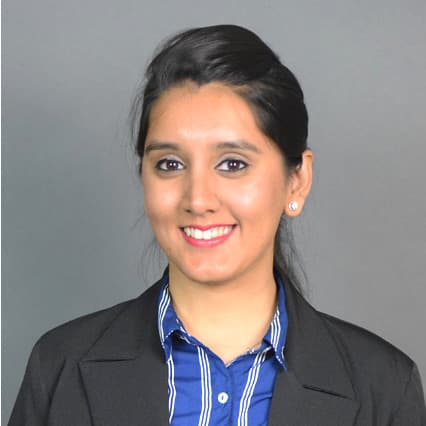
As a child, I was always dealing with technical stuff and I was quite curious to know how things work, whether it be using maths or science. That's how I took up computer science when I was in school. Further, I took up my bachelors as well in computer science and engineering. After the completion of four years, it made me realize that yes, this is what I want to do and I wanted to get into the technical aspects of anything that works in the industry. That further led me to working with two telecommunication companies in the last four years. Initially with Ericsson and further, I moved to Amdocs. More or less, yes, the work was the same, but it made me realize that this is something that I like to do. But then I wanted to add more value to it which further helped me to understand on how to deal with data and, how and where, what options are open for me? So that struck me that i need to add more value to whatever I have been studying, which should be leading to a Masters degree. I analyze that networking was something that had a very short scope, at least for me. Hence, I thought of moving to something related to analytics. I started researching in the same domain and looking for options that would best suit what I like to do. That's, when it struck me that I need to pursue my Masters in the field of information sciences, so that it helped me to achieve something that I really like to do.
Okay, so I have taken the Business Intelligence and Analytics as I said I'm interested in analytics. That's the field that I've chosen. The curriculum definitely helped me out because I've taken subjects like Introduction to Business Analytics, Marketing Analytics, which has helped me so far to understand the basics and move on to something I really want to know, something that I actually want to pursue in the coming future. Which specialization course is my favorite, so far I have started statistic and predictive analytics. It's helping me a lot to know what is expected out of an analyst and, how to play with numbers and how to code in R. So yes, I'm enjoying it all. Average time per week would be like, if there are two classes, which usually are. I spend, like eight hours in classes and to do my assignments, I would say at least ten to fifteen hours in a week.The various specialization and courses in my curriculum, so basically, as I'm interested in analytics, there are four different courses or career paths that you can choose. Out of them, I chose Business Intelligence and Analytics, that's something that which is something that pulled me to get admission into this university as well, and choose this as the one that would take me forward. On the courses that I have chosen in my first semester as of now, are Introduction to Analytics, Marketing Analytics, Statistical and Predictive Analytics. They are somewhere related to something that I have studied before, because, as I said, I have a Bachelors in computer science, so I this has nothing that i've never done, coding or I have not worked in the technical aspect, but, yes, this is a different type of work that I'll be working on. The average time per week that i give to classes is around six to seven hours a week and for my quizzes, labs, assignments I can say ten to fifteen hours. I do invest some time into self study and that's what we all are here for, so I can say that it shouldn't take more than twenty to thirty hours, taking your assignments and labs and whatever extra, you would want to study. The curriculum is a made in such a way that you are not loaded at any point of time and it's quite well balanced.
As I said, since I'm a computer science engineer. And I did my bachelors in it and so I wanted something that would go along with what I have already done, so that I'm just not out of place. Hence, I chose the University of Utah and MSIS program. What prompted me to take it, because it has a good amalgamation of analytics and the information system subjects and the other programs that I chose were, you know, University of Illinois, Chicago. I applied to that because I'd heard a lot about it, but that was totally concentrated on MSBA, which is something that i thought that i would feel out of place at. So I did not choose that. So initially, having a computer science bachelors, I thought of pursuing my masters in the computer science field, but since I was more inclined to learning analytics, I was basically looking for something that had a good amalgamation of both. Hence after a lot of research, I came down to Masters in Information Systems for which I applied to around six or seven universities all over the US. I liked the University of Utah, David Eccles school of business for a very specific reason, because it helps me to wave off all the core courses that I have already studied in my bachelor. So basically, I don't need to study anything that will not help me in the future and also it's a choice and a great advantage as well. So, I was able to wave off courses like Java and the SQL, which I have already studied in my undergrad and hence that helped me to take courses that are more relevant to something that I want to pursue in my future. The program is quite flexible and I have been able to take a lot of electives outside the course of the MSIS basically, most of them related to analytics. I did not choose MSBA, because that would totally take me away from the technical background that i already have and I did not want to be in a place where I did not know whether I belong to that place or not. Hence, I chose the course and the MSIS and I'm quite happy with it.