This is software (AWS) generated transcription and it is not perfect.
Well, first of all, thank you for inviting me. It's my pleasure to participate in these types of sessions. I always believe that mentoring, paying it back is the right way to go so I'm very happy to be here and thank you for the opportunity. So, how did I get to where I am today and what's my story? So it's actually a bit fortuitous. I'm actually a hardcore chemical engineer by training, all of my degrees are on chemical engineering, went to Case Western for undergrad and graduate school. Then when I came out, I worked for General Electric for about a decade, working on a variety of different things that are actually chemical engineering oriented. But then, I started to go into things that a little bit different, part of my experience with General Electric, I had the opportunity to basically start a small business within a big company. Now, when you do things like that you end up learning a ton of stuff that you didn't know that you were going to learn so that was basically the experience set that ushered me into the next company that I worked for, which was the Dow Chemical Company. I was basically doing a similar thing, starting a new business in a big company, but in a totally different area so I did that and then I had another role within Dow Chemical. So I worked there for a few years, and then I went to Avery Dennison and then I went from there to Val Spot, and I was responsible for the consumer paint portion of it. So it's a pseudo business to consumer instead of business to business type of setting, which was more General Electric at Avery Dennison. Then from Val Spot, I went to Pepsico, and now I'm in Coca- Cola. I never thought that I would be making this right. I never thought that I would be doing this, my thesis was on bifurcation analysis a nonlinear analysis of bifurcation control of instability of a gas turbine engine. So it's like, How did I go from that to Coca Cola? but I think part of this is what helped me shape my career and sort of the pieces of the puzzle that I remembered the most and treasured the most and I learned the most from are essentially the pieces that are quite different from what I've ever done. When I decided to take the opportunity to start a new business in a big company back in General Electric, it was clearly something that I've never done. Basically, I do what I knew and I figured that whatever I didn't know, I would just get into it and learn it. Some parts of it were more or less that, some parts of it were I had no idea that I needed to know certain things right. I'll give an example and some of these are not highly technical either, but they're just things that you wouldn't necessarily think about. I was building a manufacturing site in the U.S and I was engaged in this capital project that required some modification to the infrastructure in the foundation of an existing manufacturing site and so my contractors came to be one day and said, We're going to do an exploratory dig and I asked him, What is an exploratory dig? And they said, Well, we're going to have to lay wires in the ground and there are gas lines around the building, so we're going to dig around and see where that, but we don't know where exactly these things are so we're going to dig around to see where gas lines are so that we don't inadvertently chop him and make the plan explode. So that's called an exploratory dig. So I was like, Wow, something new every day. I didn't know that there's a term for that kind of thing but I think things like that I had no idea about were going to be part of my learning but when you do something you're not familiar with and if you trust yourself enough to and have faith in yourself that you that whatever you don't know, you'll figure it out and then you're not too proud to ask and write all the rest of it and usually that helps you get to a point that you probably didn't think that you could get to. So there are lots of stories like that like, why am I making Coca Cola. before this, I was making potato chips, and that was a lot more than these obviously right oversimplifying it. But, How did I learn what a consumer package or fast-moving consumer goods company would really operate? What is digital marketing? What is Channel marketing? There's a lot of these things that as my career puts me closer to the consumers I have to learn more and more about aspects like that but if you don't trust yourself if you don't allow yourself to explore these, if you don't expose yourself to more riskier endeavors then you'll never really learn. So I think that's the main thing that I a lot of times hold on to not just a career, but a lot of things that I do.
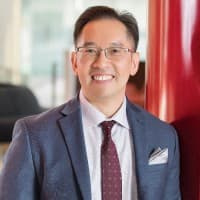
I serve as the Senior Vice President and Chief Technical Officer for Coca Cola and specifically I am the Chief Technical Officer for Coca Cola North America business. It's a business that the Coca Cola revenue it's more than $12 billion and what we call the system revenue, which obviously we sell a lot to our bottlers, they make Coca Cola to things like this or things like this. The system revenue, which includes their revenue is beyond $25 billion just for this region. So now my responsibilities, I'll tell you what my groups have. I have a fairly large R&D team that focuses on the efforts on anything from sparkling soft rings to premium water, for example, smart water flavors. and there are four different flavors, they're delicious. Those are things we're going to actually start shipping and milk under the brand name that will be available in the marketplace, probably the next week or two, actually but that it gets into formulation science, mixing, process engineering and development across the board on and all brands that we selling Coca Cola in North America so any of the sparkling soft drinks water, minute maids, simply our juices and lemonades and other types of juice blends to dairy and also alternative to dairies so simply almond milk. So my R&D teams do all of that. Then I have a team that basically takes the formulations that the R&D folks come up in a laboratory setting and then they worked with the supply chain and manufacturing folks to scale them up in a plane setting so we call that team technical commercialization, and it's a pretty specific skillset that you need to understand the intricacies and some of the details of the laboratory environment and the formulations work that carry out under that setting. But you also need to understand how to scale something like that up and make 100 million cases a year, how to go from grams or tens of grams to 100 million cases a year. So that's what these people do, right there, they are pretty special groups. Then I have a group that looks after QSE so that's quality assurance, safety and environmental. So the quality assurance pieces ultimately, I'm responsible for the quality of our products, but which extends into the bottlers. I'm responsible for the quality assurance of these things as well. Safety is self-explanatory and environmental has to do with all of the environmental footprints, whether you talk about carbon footprints of products to our processes, which includes obviously plastics, they use plastics and the circular economy aspects of that, but also includes your aluminum and glass because we have a good part of our portfolio that lives in those formats and then also water. So water retention, water scarcity, utilization, groundwater safety, all of those fit under that group. Then the last group last but not least is what we call SRA or scientific and regulatory affairs. So scientific affairs are these are folks that are for the most part toxicologists and they help us understand the toxicity, and whether it's safe, safe to use on a lot of ingredients after mixing, do you have anything that comes out that's not supposed to be there. Regulatory affairs work with entities like FDA and Prop 65 in California to make sure that we're compliant with regulations and also can proactively work with these agencies to shape the regulatory landscape to make sure that we're doing the right things for consumers. My responsibility is actually rather wide because it's not just new products that we put in the marketplace that I have responsibilities for but from product development, commercialization, quality, regulatory compliance, state point, but also all the existing parts. So it's kind of hard to say but no new products are going on the market without somebody in my team touching it, approving it and ultimately the bucks kind of stops with me from the technical and R&D state point and equivalently no existing products, any issues that consumer might find or we have a planning issue or whatever none of that stuff could go anywhere without me. I know it is a little broad, maybe not crystal clear, but almost nothing happens without my order.
I will give you a couple of bond entities of people that I have worked with on the outside. There are three groups of people external to Coco-Cola that I work with. One of them is basically external stakeholders, these are people that could be in entities like FDA or these people could be in organizations such as the American Beverage Association sort of industry associations or in some cases advocacy groups that I would work with. My direct engagement with the external stakeholders typically is either the director of a certain area in an FDA equivalently prop 65 or the CEO of the Industry Association, for example, later this month, I'm supposed to visit what used to be the Grocery Manufacturing Association, now called the Consumer Business Association, supposedly I'm taking one of my team members that go meet with the president and CEO of CBA and some of his senior vice presidents that look after regulatory side of things. So those are some people and their titles that I work with. Another group is obviously our customers, and in some cases, it is not just the customers, but also the customer's customers. So in, in things like this, we sell to bottlers and they sell to retail customers like Wal Mart and Kroger and Publics. We have a team here within North America that actually interfaces directly with the bottlers but we also have a team that works very closely with the first team but they interface with the retail customers but both of those pieces of the puzzle are my customers so I would interface with the customers when they need me to so typical situations where I would go to a meeting is, for example, if we have new innovations that are launching, we're doing what we call a selling process, so they might bring me or they might bring somebody in my team to go to a meeting where we would sit with, for example, the merchandising team, Wal Mart. So one of the meetings that I've been through, for example, is the chief merchandising officer of a really large grocery manufacturer, a retailer and his whole merchandising team and we were doing business reviews but we're also making merchandising assortment decisions for the next year in which the placement of the innovations come in to play. We have a very productive dialogue in terms of what, how much and how would it appear on shelves. Another group of people that I would interface with is basically the suppliers and partners so if we buy certain packaging right be it a can or a bottle. We buy rigid packaging from Richard packaging companies, so I would meet with the president of that particular division along with the, for example, the VP of R&D that supports that business and we would have business dialogue in terms of existing supply, but also new material supply opportunities. So typically, these meetings I would attend either with supply chain or with procurement or in some cases, with marketing. So but with certain categories, it depends on how much money we spend but in certain categories, we may actually do supply or something, So we might actually round up everybody that we buy from and as well as that we could buy from and we bring them all in that we have a supply or something to articulate to them, Here are the sort of the specific areas of growth that we want to focus on and here is an overview of the needs that we have or will have in this area to a bunch of suppliers, both current and potential, so that they have a good understanding, and then they go back and prepare their business to participate in our business. So generally, those are the three groups suppliers, customers, and external stakeholders, that are outside of the company. Inside of a company, it's a little messy because I work with a lot of different people, but I'll give you a couple of examples of the teams that I sit on when we go to decision making. So I sit on, for example, because I'm the chief technical officer of the Coca Cola North America business, I sit at some member of the Coca Cola North America executive leadership team so we would make decisions, anything from business decisions to people decisions, technical decisions to regulatory decisions or positions that we should be taking with some of our stakeholders as a business, we would make those decisions jointly as a part of that executive leadership team or a business management team. Another team that I am a part of is what we call the global technical leadership these are basically all the technical leaders around the world that are in a position similar to mine. So my position in Coca Cola company is actually unique, there's only one of me. There are three positions like this that are unique and I'm one of them. No one actually has what I have anywhere else in the world but there are people that have similar responsibilities compared to mine that sits around the world and collectively, we form what we call global technical leadership team. We would get together every once in a while and discuss like best practices, things like improvement opportunities or how do we share innovation, how to share knowledge, knowledge retention mechanism, technical capabilities mapping to not performance management but things like succession planning, hiring strategy. So, some of the folks on that team are, for example, the global chief technical officer of Coca Cola, Global Chief Innovation Officer, other vice presidents for some of the regions that have technical responsibilities, those are my teammates for that global technical leadership. The business management team, the other folks that are on that Executive leadership team obviously is shared by the president of Culpable in North America but some of the other members are people like the chief IT officer, HR Officer, the CFO, The chief financial officer, the chief supply chain officer. So people like that and also what we call the business unit presidents. These things are called spotlight so it's a business unit, multi $1,000,000,000 business unit and they have a business unit president. These things are another business unit that is also a multibillion-dollar business unit that sits under the responsibility of another business unit president. So those are some of the people that make up that business. The function that I had responsibilities for is technical and is based on science and technology, it is a science and technology organization. So by definition, we're expected and we do to bring data into a dialogue that's half of the puzzle and a scientist that actually pretty sort of natural to us but that's half of the equation because the facts are the facts but the circumstances are often different and one big difference between academia R&D and the industrial R&D is that industrial rd, a lot of times you don't have enough time to actually do one more experiment, so sometimes you have to go with 80% data, 70% data, 60% data, 40% data, and you have to make a decision because the business cannot wait. And so having the data and as much as you can't bring right, that's obviously very critically important but that's only 1/2 of the equation. The other half of the equation is to be able to understand what is the problem you're trying to solve and is it a supply problem? Is it a business problem, what is that? and what is the underlying business strategy that is important to do and in how many ways can you accomplish the goal? But yet have different pieces of the puzzle that you could move around. So, part of this is to understand how you look at the data? Because you have whatever data you have, you're not going to be able to really change that all that much but scenario planning is an important piece of my role and my immediate leadership teams. So because we as a technical organization, part of our responsibility is to help the business understand the level of risks that they would be taking by carrying different actions. So, scenario planning based on a set of data is an important feature that we do and then the rest of it in terms of just being effective at working with a bunch of people that are not necessarily technical. Generally, two things, One is that you have to speak their language so if it is a brand person you have to be able to talk about the value proposition to the consumer, consumer experience that, what is the soul of the brand? What does it make sense for this brand to have this, but not the other brand? If you're talking to talking to a finance person than you have to be able to converse with, what is the net revenue opportunity? What does the portfolio look like versus the individual elements? What is that planning cycle? And how does that come back and effect? Our annual, quarterly, and monthly financials, so you have to be able to speak their language. The third and the last piece really is, it always helps to understand what motivates right. So, I'm motivated by a different set of things than my neighbor but if you don't understand what those sets of things are, what my value system is, and how do you motivate, it's very difficult for you to make that set of data come to life. It just happened, somebody was asking me, Hey, we have this story from a technical aspect and we need to convince people to come along with us and how do I do that? Well, I said, look, you have to understand if you want them to come with you, you have to understand what motivates them, are they risk-averse or competitive? because we have the same set of data, data is data, it doesn't don't do anything else but if it's a bunch of very risk-averse people, maybe you can highlight the risk scenario and tolerance if you put yourself at this risk level or this risk level what does this difference mean in business terms? But if you're talking to a group of people that are really competitive, you may want to set up an internal competition, the highest quality wins. So you always have to understand the audience that you're talking to and how to motivate it. So this term 'know your audience' sounds really easy, but it's really difficult to do but sometimes that piece of it is what makes or breaks a discussion.